
12Oct
The Future of Business Operations: How Remote Services Help Companies Scale Globally
The way businesses operate is changing.
Companies are expanding into new markets, managing teams across different locations, and adopting digital technologies to improve operational efficiency.
However, as organizations grow, managing daily operations becomes increasingly complex.
Financial reporting, employee administration, IT infrastructure, and facility maintenance all require consistent coordination.
For many businesses, the challenge is no longer simply finding the right people.
It is building an operational structure that can support growth without creating unnecessary complexity.
This is where remote business services are transforming how organizations manage essential functions.
Through digitally connected teams, centralized workflows, and structured reporting, businesses can access operational support without requiring every function to be managed from a single physical location.
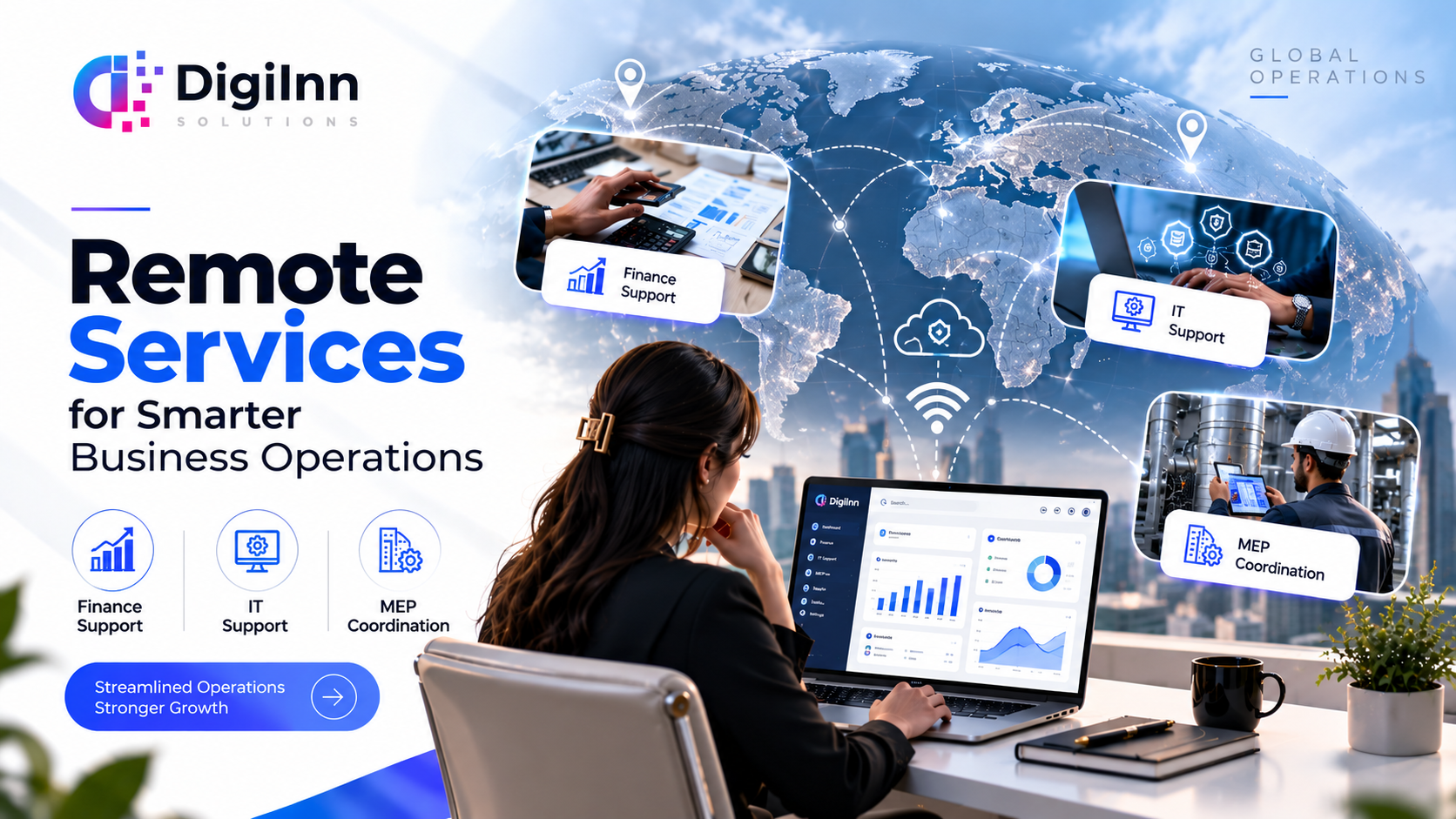
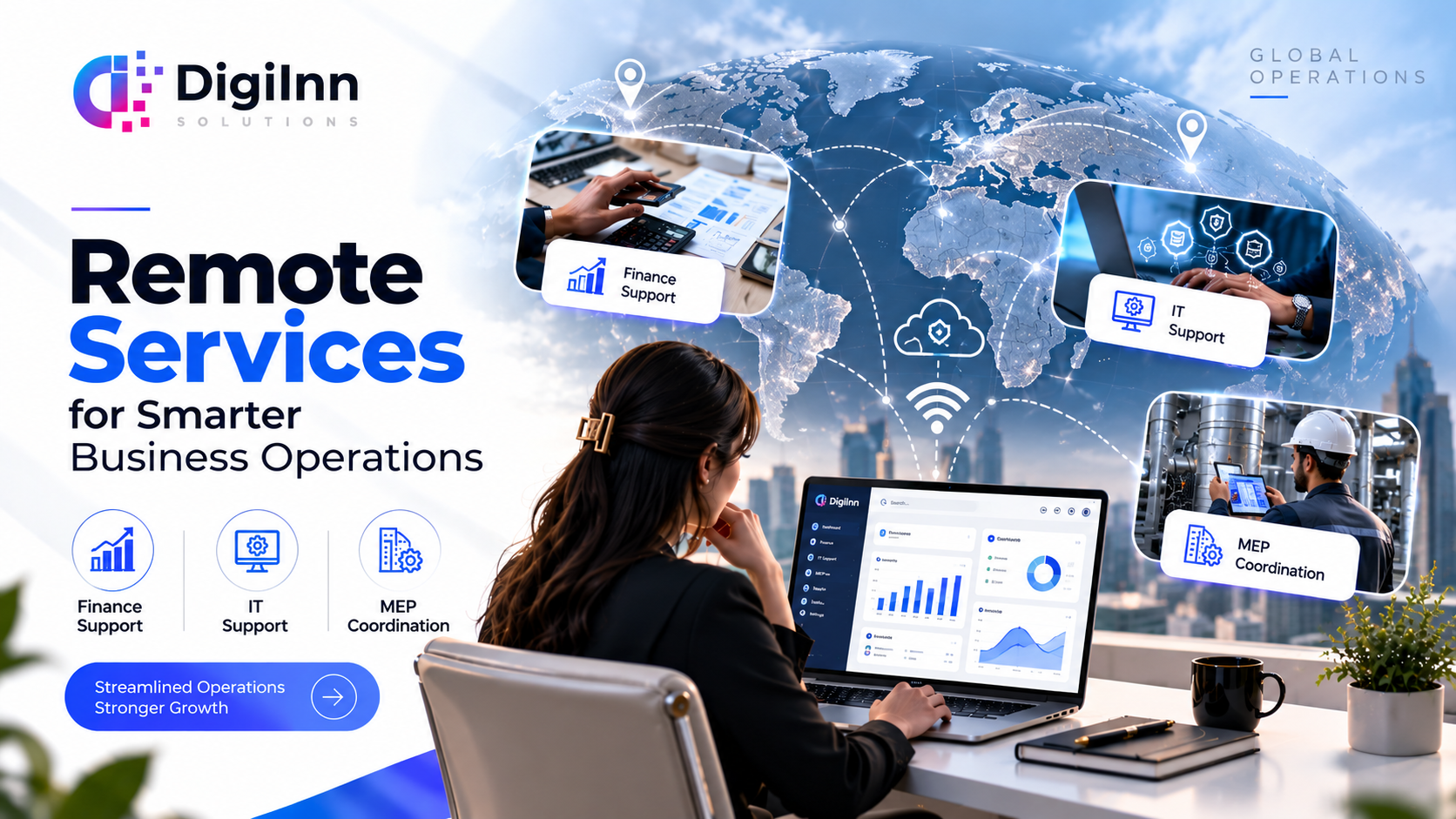
At Digi-Inn Solutions, we provide remote operational services designed to help businesses manage finance, human resources, IT support, and MEP coordination more efficiently.
Our approach focuses on helping organizations build connected, flexible, and scalable operations.
Why Traditional Business Operations Are Becoming More Complex
Growth creates opportunities, but it also introduces operational challenges.
A company managing one office may find it relatively easy to coordinate its finance, HR, and technical requirements.
But what happens when that business expands to five locations, enters new markets, or increases its workforce?
Administrative workloads increase.
Financial processes become more demanding.
IT support requests multiply.
Maintenance activities require coordination across multiple facilities.
Without structured systems, organizations may experience delayed reporting, duplicated work, communication gaps, and limited operational visibility.
These challenges can affect businesses across industries, including real estate, construction, hospitality, healthcare, retail, manufacturing, and professional services.
The solution is not always to expand every internal department.
Sometimes, businesses need a smarter way to organize and support existing operations.
What Are Remote Business Services?
Remote business services involve managing or supporting selected business functions through teams that operate outside a company's primary workplace.
These services use digital tools, communication platforms, and defined workflows to coordinate recurring business activities.
Unlike traditional outsourcing models that may focus primarily on delegating tasks, modern remote services can emphasize accountability, reporting, collaboration, and operational performance.
For example, an international company may use remote teams to support financial documentation, HR administration, IT troubleshooting, and maintenance scheduling while retaining strategic oversight internally.
This creates an opportunity to separate the location of a task from the quality and accountability of its execution.
The future of business operations is not about where work happens. It is about how effectively work gets done.
The Growing Importance of Remote Operations for Global Businesses
Remote business services are becoming relevant to organizations seeking greater flexibility and efficiency.
Their value extends beyond potential cost savings.
1. Greater Operational Flexibility
Business requirements change as organizations expand, restructure, or enter new markets.
Remote support arrangements can provide additional operational capacity without requiring every support function to grow at the same pace.
This flexibility can be useful for companies managing seasonal workloads, multiple branches, or changing project requirements.
2. Access to Specialized Support
Not every organization needs a full-time internal specialist for every operational responsibility.
Remote service models can make selected administrative and technical capabilities accessible through dedicated or shared support arrangements.
This allows internal teams to focus on responsibilities that require direct business knowledge, local presence, or strategic decision-making.
3. More Structured Business Processes
Remote operations depend on clear communication, documented procedures, and defined responsibilities.
When implemented effectively, these practices can improve consistency across recurring workflows.
Instead of relying on scattered spreadsheets, informal messages, and disconnected records, organizations can move toward more organized operational processes.
4. Improved Business Continuity
Companies operating across multiple locations need dependable support structures.
Remote service teams can complement local employees by helping maintain administrative and technical workflows when operational demands change.
However, continuity depends on appropriate staffing, service coverage, cybersecurity, and escalation arrangements.
5. Better Operational Visibility
Centralized reporting and structured service workflows can give management clearer insight into pending tasks, recurring issues, and departmental activity.
This supports more informed decision-making and helps organizations identify opportunities for process improvement.
Digi-Inn Solutions: Remote Services Built Around Business Needs
At Digi-Inn Solutions, we understand that businesses need more than external resources.
They need reliable operational support that works alongside their existing teams and processes.
Our remote services focus on four important areas.
1. Remote Finance and Accounting Support
Financial management is a critical part of every growing business.
As transaction volumes increase, maintaining accurate records and organizing financial information becomes more demanding.
Businesses may struggle with repetitive bookkeeping tasks, expense documentation, payroll inputs, and management reporting.
Digi-Inn Solutions provides remote finance and accounting support to assist with these recurring responsibilities.
Our services can include:
Bookkeeping and financial record organization
Accounts payable and receivable coordination
Expense tracking and reconciliation support
Payroll administration support
Financial documentation and reporting
Routine accounting workflow coordination
By establishing organized financial processes, businesses can improve the consistency and accessibility of their financial information.
Remote finance support can also help internal teams dedicate more attention to financial planning, business analysis, and strategic decisions.
Applicable accounting standards, tax obligations, privacy requirements, and professional licensing rules must remain under appropriate local oversight.
2. Remote Human Resources and Administrative Support
Managing employees involves more than recruitment and payroll.
Organizations must coordinate documentation, attendance, onboarding, internal communication, and recurring administrative processes.
For businesses operating across different locations, these responsibilities can become increasingly complex.
Digi-Inn Solutions offers remote HR and administrative support to help organizations manage selected workforce-related activities.
These may include:
Employee record administration
Attendance and leave record coordination
Onboarding documentation support
Payroll data preparation
HR reporting and documentation
Routine administrative workflow support
Structured HR processes can help organizations maintain more consistent records and improve communication between departments.
Remote HR support is intended to complement internal leadership and local HR functions, with employment decisions and legal obligations remaining under appropriate organizational oversight.
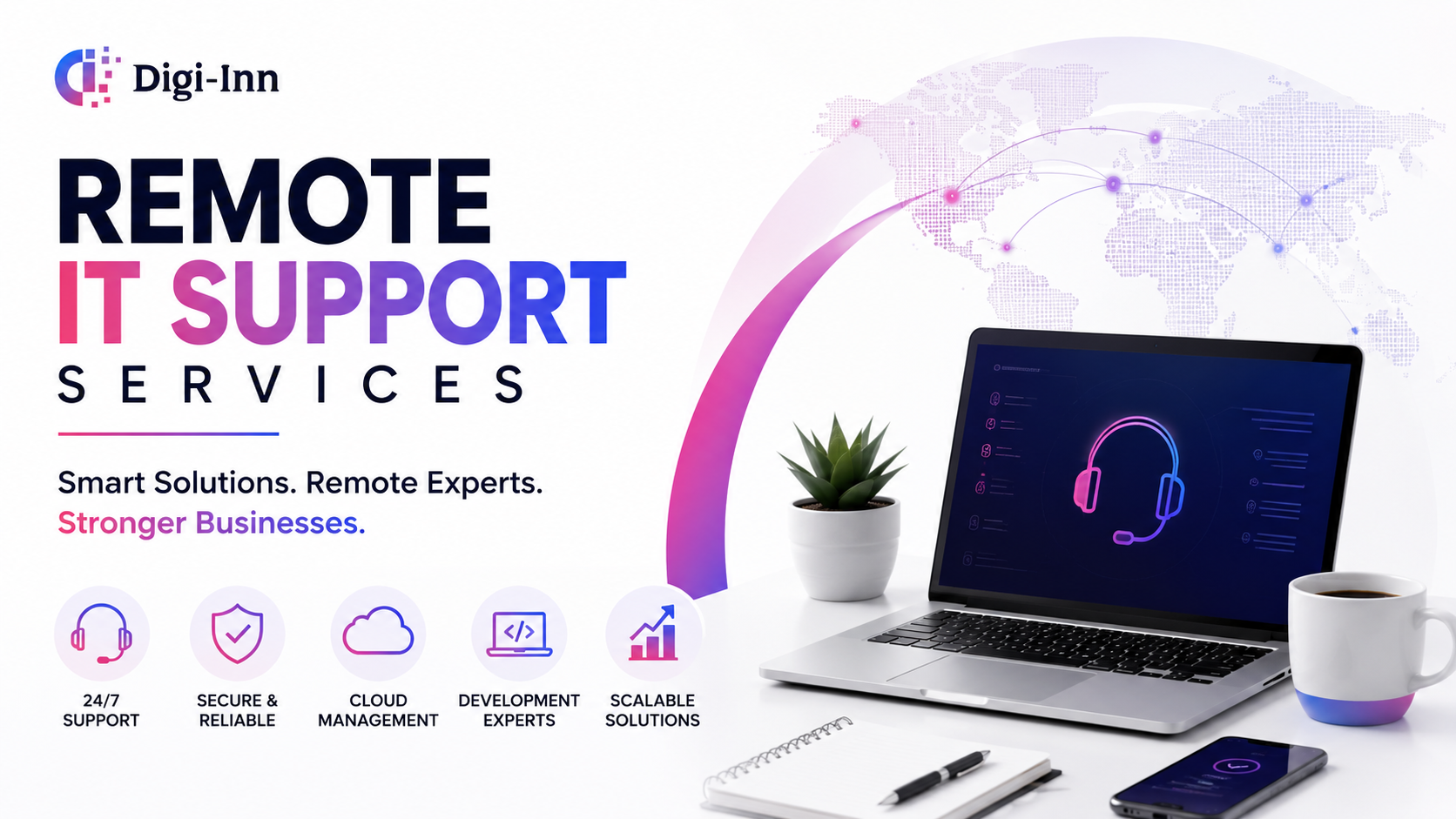
3. Remote IT Support and Technical Assistance
Technology is essential to modern business operations.
From employee devices and enterprise software to internal applications and communication systems, businesses depend on reliable digital infrastructure.
When technical problems occur, they can interrupt productivity and affect customer service.
Remote IT support provides a structured way to manage technical requests and coordinate troubleshooting.
At Digi-Inn Solutions, our IT support capabilities can assist with:
Remote technical helpdesk support
Software troubleshooting
Employee device assistance
Application and system support
IT issue documentation and tracking
Developer and technical team coordination
Escalation of unresolved technical issues
Through defined support workflows, businesses can improve communication between employees and technical teams.
For organizations operating internationally, remote IT assistance can complement local technical resources and help maintain more consistent support processes.
Service availability, access permissions, and response times should be defined according to each organization's requirements.
4. Remote MEPOperations Coordination
Facility management is another area where remote coordination can create operational value.
Organizations managing commercial buildings, residential developments, hotels, healthcare facilities, or industrial properties must coordinate ongoing maintenance activities.
Mechanical, Electrical, and Plumbing (MEP) systems infrastructure require planned maintenance and timely attention.
While physical maintenance must be carried out by qualified on-site personnel, many supporting processes can be managed remotely.
Digi-Inn Solutions provides remote MEP operational coordination services that can assist with:
Preventive maintenance scheduling
Work-order and service-request tracking
Maintenance ticket coordination
Technician and vendor communication
Maintenance documentation
Service-status monitoring
Follow-up reporting
For businesses operating multiple facilities, centralized coordination can help create a clearer view of maintenance activities.
This supports more consistent scheduling, documentation, and communication between facility managers and service teams.
How Remote Services Support Different Industries
Remote business services are not limited to one type of organization.
Their applications depend on the operational requirements of each industry.
Real Estate and Property Management
Property developers and management companies can use remote finance administration, IT support, and maintenance coordination to support operations across multiple properties.
Construction and Engineering
Construction businesses often manage distributed project teams, contractors, financial records, and technical requirements.
Remote administrative and technical support can help coordinate recurring tasks between project locations and management teams.
Hospitality and Restaurants
Hotels, restaurant groups, and hospitality businesses depend on consistent operations across their locations.
Remote IT support, financial administration, and maintenance coordination can help support their day-to-day activities.
Healthcare and Medical Facilities
Healthcare organizations require dependable technical systems, organized administration, and effective facility operations.
Selected non-clinical support functions can be coordinated remotely, subject to applicable healthcare, data protection, and regulatory requirements.
Retail and E-Commerce
Retailers and e-commerce businesses may benefit from remote finance administration, HR support, and technical assistance as their transaction volumes and operational requirements increase.
Manufacturing and Industrial Businesses
Manufacturing companies often need structured financial processes, employee administration, technical support, and facility maintenance coordination.
Remote services can complement on-site teams by supporting these functions through organized workflows.
Remote Services vs. Traditional In-House Operations
Remote services are not necessarily intended to replace internal departments.
Instead, they can provide additional operational capacity and specialized support.
 The right approach depends on business size, operational complexity, regulatory obligations, and the level of control required.
Many organizations may benefit most from a hybrid model that combines internal teams with remote operational support.
From Remote Support to Operational Intelligence
One of the most important opportunities created by remote business services is the ability to organize operational information more effectively.
Consider a business operating across several countries.
Its finance department maintains financial records.
Its HR team manages employee documentation.
Its IT team handles technical requests.
Its facility managers coordinate maintenance activities.
When these functions operate independently, management may struggle to obtain a complete picture of business operations.
Structured digital workflows can help bring greater consistency to reporting and communication.
This creates an opportunity to move beyond task completion toward operational intelligence.
Operational intelligence means understanding what is happening across the business, identifying recurring challenges, and using that information to make better decisions.
For growing enterprises, this visibility can become an important part of managing complexity.
Why Technology Matters in Remote Business Operations
Remote services are most effective when supported by appropriate digital infrastructure.
Communication tools, cloud-based systems, ticketing platforms, reporting dashboards, and enterprise applications can help teams collaborate across locations.
However, introducing more tools does not automatically improve operations.
Technology must be aligned with business processes.
At Digi-Inn Solutions, our broader capabilities in custom software development, enterprise systems, and digital transformation complement our remote operational services.
This allows us to approach business challenges from both an operational and technological perspective.
The objective is to help organizations establish more connected processes rather than introduce additional disconnected systems.
Building Secure and Accountable Remote Operations
Successful remote service arrangements require more than access to technology.
Businesses must establish appropriate governance, security, and performance expectations.
Important considerations include:
Clearly defined responsibilities and service scope
Appropriate system access controls
Data privacy and cybersecurity safeguards
Documented communication and escalation procedures
Service-level expectations
Regular reporting and performance reviews
Compliance with applicable local and international regulations
Cross-border services may also require specific arrangements for data transfers, employment responsibilities, financial processes, and industry regulations.
A well-designed remote service model should protect business information while supporting reliable service delivery.
The Future of Global Business Is Connected Operations
As businesses become more geographically distributed, operational models will continue to evolve.
Organizations will need to balance local expertise with digitally enabled support capabilities.
Remote finance teams can help organize recurring financial processes.
Remote HR support can assist with workforce administration.
Remote IT teams can coordinate technical assistance.
Remote facility support can help manage maintenance schedules and service documentation.
Together, these functions can contribute to a more connected business environment.
The long-term value of remote services is not simply working from different locations.
It is creating operational structures that are flexible, transparent, and capable of supporting growth.
How Digi-Inn Solutions Helps Businesses Operate Beyond Boundaries
At Digi-Inn Solutions, we believe business growth should not be limited by operational complexity.
Our remote operational services are designed to help organizations manage essential business functions through structured processes and digitally connected support.
From finance and HR administration to IT assistance and MEP coordination, we work to support businesses as their operational requirements evolve.
Combined with our capabilities in custom software, enterprise systems, and digital transformation, our services offer businesses a broader approach to improving operational efficiency.
Whether an organization operates locally, manages multiple branches, or serves international markets, the objective remains the same:
Build smarter processes. Improve operational visibility. Support sustainable growth.
Conclusion: Your Business Can Grow Beyond Borders. Your Operations Should Keep Up.
Global expansion creates opportunities, but it also demands stronger operational structures.
Businesses need dependable financial processes, organized workforce administration, reliable technical support, and effective facility coordination.
Remote business services can help organizations address these needs through flexible, digitally enabled operating models.
When combined with clear accountability, appropriate technology, and effective local oversight, remote services can become a valuable part of long-term business growth.
At Digi-Inn Solutions, we help businesses move toward more connected and scalable operations through remote services and digital transformation solutions.
Because the future of business isn't defined by where your team works. It's defined by how intelligently your business operates.
Ready to Build Smarter Business Operations?
Explore how Digi-Inn Solutions can support your organization through remote finance and HR administration, IT support, MEP coordination, and custom digital solutions.
Beyond Digital: How AI and Automation Are Redefining Business Transformation
Aug. 28, 2026, 2:16 p.m.
Restaurant Inventory Management: How to Reduce Food Waste, Stock Loss & Improve Profitability
Aug. 20, 2026, 10:48 a.m.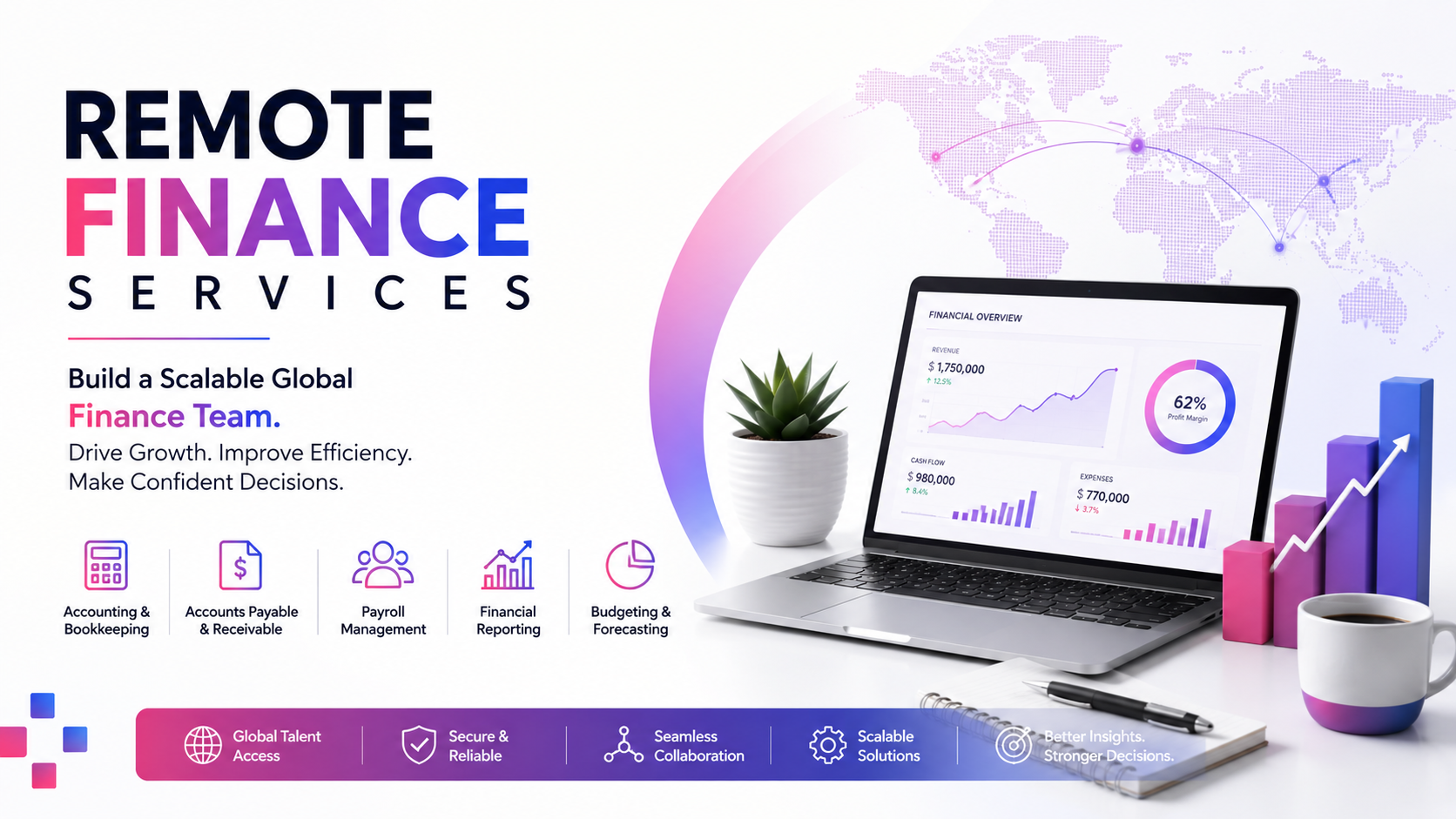
Leave A Comments